
A Brief History of Traditional Carpet Making
Rug Making is an ancient art form that goes back thousands of years BC.
In the Middle East, rug and carpet-making became a home industry where individuals would make rugs for their own use. In their spare time, they would make extras to sell at a later date or use as payment for other goods and services. In fact, carpets were readily accepted for payment of dowries, to buy livestock or to pay off taxes.
In India however, rugs were almost exclusively woven for the Mogul (Mughal) rulers and did not penetrate into the daily lives of the common people.
In China, handmade rugs were essentially ornamental and made for those of high stature and wealth who could afford to purchase them or have them made.
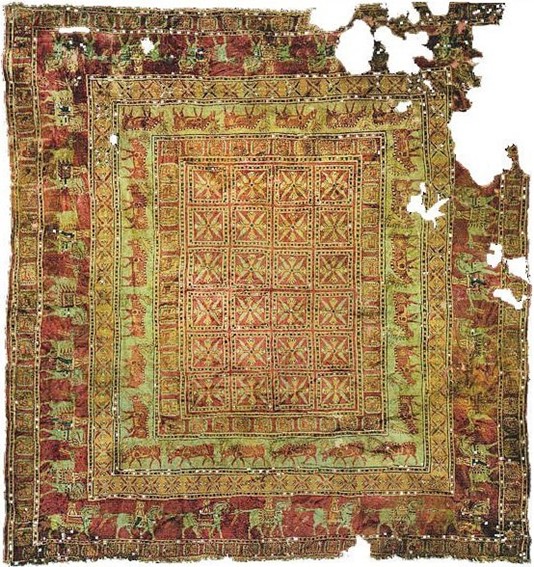
The Pazyryk Carpet, the oldest surviving carpet in the world.
Currently, one of the oldest known rugs was found in 1947 by the Russian archeologist Sergei Ivanovich Rudenko. The “Pazyryk carpet” was placed in the grave of a Skit’s prince, in Pazuluk valley, mount Altai, south Siberia. This carpet is dated from 5 century BC. Preserved in ice for thousands of years, this rug of unknown origin measuring approximately 5 x 6 feet, has all the characteristics of a Modern, Persian, or Anatolian rug with a pile and Ghiordes knot.
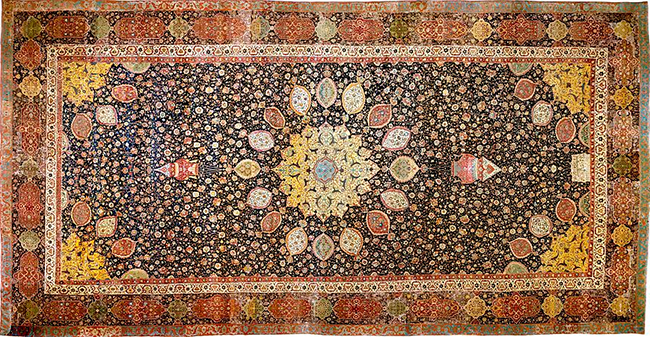
The Ardabil-carpet.
The most famous rug in the world, the Ardabil carpet. Originally there were two carpets but one was sacrificed in order to repair the other. The carpets are considered some of the best of the classical Iranian (Persian) school of carpet creation. They were first placed in a mosque in Ardabil and they measure 534×1152 cm and were probably manufactured in the city of Kashan in Persia by Maqsud.
The carpets date back to the year 1539 A.D. It took three-four years for five weavers to complete the carpet, which was ordered by Shah Tahmasp for the Sheikh Safi mosque. The best-preserved carpet can be seen at Victoria and Albert Museum in London.
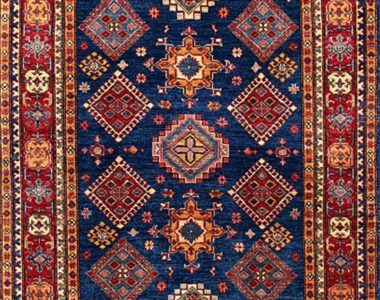
Turkish carpets are sometimes also named Anatolian carpets. The oldest Turkish carpets found, originate from the 13th century and can be found in the city of Konya, which for a long time was the center for Turkish carpet manufacturing. Carpets that were made in the 16th and 17th centuries are fully comparable with the Persian carpets.
Rug weaving in Anatolia first began with the arrival of the Turkish tribes from Central Asia, who settled in this region. Therefore, Anatolian rugs form a branch of ethnic Turkish rugs. The carpets which are thicker consist of wool, cotton, and silk and are always tied with a Turkish knot, also called Ghiordes knot.
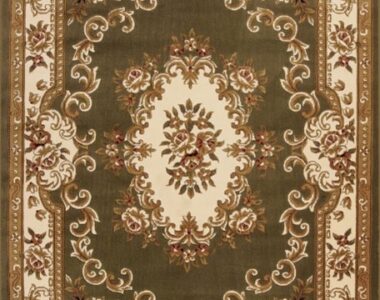
Aubusson carpets
Rugs from Aubusson rank among the world’s best. These rugs were historically hand woven from wool; they emerged from France in the 15th century for royal castles. Birthplace of handwoven Aubusson carpets is the villages of Aubusson and Felletin in France.
Whenever any new ruler came into command, various kinds of new patterns, designs, and fashion got created. They exhibit the lifestyles of that period.
Aubusson rugs are expensive hand knotted traditional woolen rugs wherein designs are technically hand carved. Unlike Persian oriental carpets, the carving highlights the main patterns that pop up on the face of the area rug.
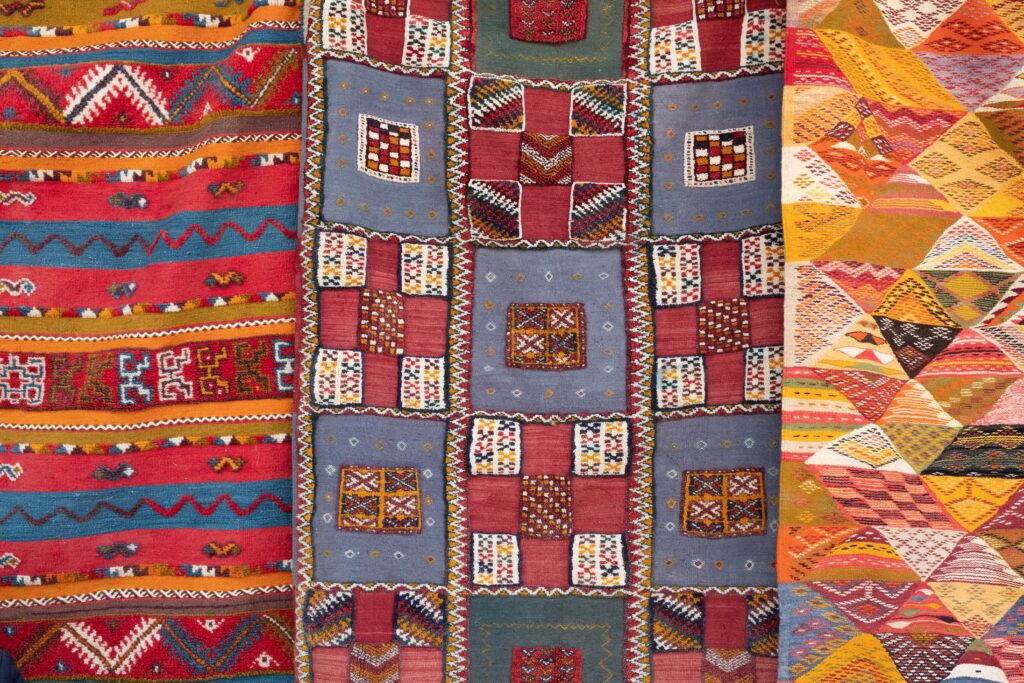
Egyptian carpets
Egyptian rugs and artisans had an enormous variety of materials to work. The skilled artisans made rugs from animal skins to the pleasing linens that Egyptian pharaohs were accustomed to wearing.
The rugs varied in color from blue, red, gold to black and purple depending on the desires of the Pharaoh or King. One of the most well-known ancient Egyptian rugs is the “Meshkah” a square carpet of a dark green color that is also called the “Green Mesh.” The history of the “Meshkah” rugs dates back to about thirty-two thousand years ago.
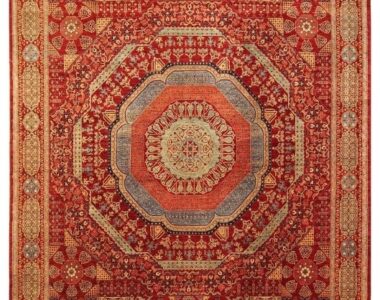
Mamluk Rugs – Egyptian Carpet Heritage
Early Egyptian rug weaving can be divided into the two periods: the Mamluks and Ottomans. Egypt’s greatest period of rug weaving was during the rule of Mamluks from the fifteenth century until the early sixteenth century. Rugs produced during this time were known as Mamluks.
Mamluk style carpets figured significantly in Mediterranean commerce and appear in Venetian paintings as early as the sixteenth century. They are characterized by a central medallion surrounded by a variety of smaller geometric motifs, forming a kaleidoscopic appearance. The palette is limited to red, blue, green, and yellow tones. Documents first refer to Cairo as a center of carpet weaving in the last quarter of the fifteenth century, and production continued until the mid-sixteenth century, shortly after the 1517 Ottoman conquest of Egypt.
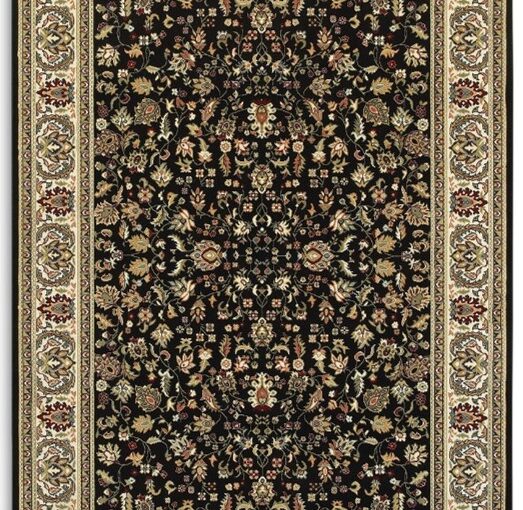
Persian Carpets
Persia, the ancient Persian name of Iran, boasts to be the world’s most superior culture in carpet manufacturing. The carpets manufactured are often named after the areas where they are made, for example, Hamadan, Mashad, Kerman (or Kirman), Shiraz, Bidjar etc.
Many cities around Iran are recognized for their rugs. Tabriz has long been known as the center of rug production, and the city’s rug bazaar is a particularly fascinating locale where visitors can witness the trade, transport, and mending of rugs. Kerman is known for its finely knotted rugs, and Kashan for its silk rugs as well as being the oldest rug-producing city in central Iran. In fact, the “traditional skills of carpet weaving” in the Fars province and Kashan were inscribed as UNESCO Intangible Cultural Heritage in 2010. Rugs woven by nomadic tribes, such as the Qashqai and Bakhtiari, are particularly noted for the variety, bold colors, and elaborate designs. Because different groups throughout various time periods have woven Persian rugs, they are a reflection of both Iran’s history and its people.
Get the best of above-mentioned traditional rugs made from OUR MASTER ARTISANS of Mirzapur / Bhadohi, coming from the same generations, who once made rugs for the ROYALTY, centuries ago. They have magic in their hands and creativity in their blood. Together, they weave masterpieces that can leave anyone mesmerized by merely looking at these near perfect, unbelievable intricate cum fabulous rugs.